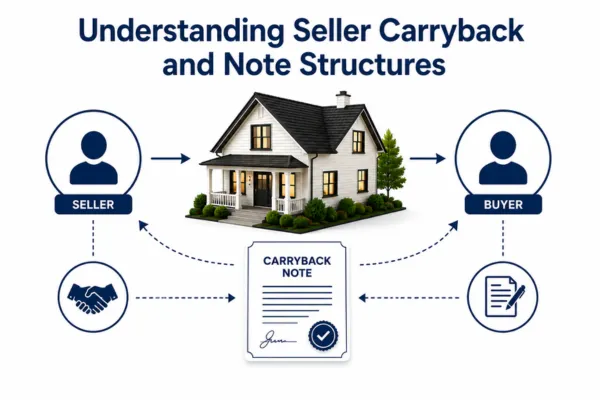
Understanding Seller Carryback and Note Structures
Acting Like the Bank: The Seller Carryback Concept
For individuals who own their property free and clear—or hold substantial equity—traditional selling isn't always the most efficient path. If you are dealing with out-of-state ownership headaches, long-distance maintenance, or landlord transition situations, a Seller Carryback structure allows you to exit active property management completely on your own terms.
Put simply, a seller carryback is a financing arrangement where the owner of the property acts as the lender for all or a portion of the purchase price. Instead of requiring a large lump-sum payout at closing, you agree to accept the purchase price over time. The buyer provides a down payment, signs a formal promissory note out of escrow, and then sends consistent monthly payments directly to you.
Seller Carryback vs. Owner Financing
While these two terms are often used interchangeably in real estate conversations, they have a slight structural difference in practice:
Owner Financing: This is a broad, umbrella term where the seller finances the entire purchase price of the home. The buyer does not use any outside bank lending at all.
Seller Carryback: This specific layout can finance the entire purchase, but it is also frequently used to supplement a primary loan. If a reliable buyer falls just short of a bank's strict requirements, the seller can "carry back" a second note for the remaining balance to bridge the funding gap.
Why These Structures Are Gaining Attention
With conventional mortgage rates staying elevated and institutional lending standards remaining highly restrictive, traditional bank financing can heavily limit the number of qualified buyers in the retail market.
For buyers who face strict underwriting rules despite being financially stable, alternative options are highly attractive. Meanwhile, Southern California homeowners with high equity often prefer the steady, predictable income from a structured promissory note over a single lump-sum payout that might carry immediate, heavy tax liabilities.
Benefits for Homeowners
Choosing to structure a sale through a seller carryback arrangement provides several clear advantages for high-equity sellers:
Expands Your Pool of Buyers: By removing the requirement for strict institutional bank approvals, you open your property up to a wider audience of reliable, non-traditional buyers.
Completely Flexible Terms: Because you are not bound by rigid corporate lending metrics, you and the buyer can work together to set a custom down payment, interest rate, and payment timeline that fits your specific financial goals.
Potential Tax Advantages: Receiving a massive lump sum all at once can sometimes push you into a higher tax bracket. A structured sale allows you to spread the capital gains over time, potentially lowering your overall tax exposure.
Faster Closings Without Bank Delays: Bypassing traditional bank appraisals, underwriting delays, and institutional inspection hurdles means your transaction can close smoothly on a predictable timeline.
Risks and Practical Considerations
Like any specialized real estate arrangement, a seller carryback involves distinct responsibilities and structural factors that must be managed carefully:
Default Risks: If the buyer stops making their agreed monthly payments, the seller must take formal steps to reclaim the property title. Because of this, verifying the buyer's financial background is a critical part of your due diligence.
Requirement for Precise Documentation: These arrangements require thorough, professionally drafted contracts—including a clear promissory note and a deed of trust—to legally protect the interests of both parties out of escrow.
Market Adjustments: Shifts in local property values or broader interest rates are important variables to evaluate when locking in a long-term, fixed-rate note.
The Bottom Line
A Seller Carryback simply turns a physical real estate burden into a streamlined financial check. It is an excellent option for tired landlords, out-of-state owners, or equity-rich individuals who want to secure steady monthly income without the stress, public open houses, or high commissions of the traditional retail market. Because these frameworks involve unique title and financial factors, looking over these structures with a professional advisor ensures you can move forward safely and with absolute clarity.
Want to see if a carryback structure matches your property details? Check your details using our interactive tool https://sellwithrelief.co/self-guided-tool
